
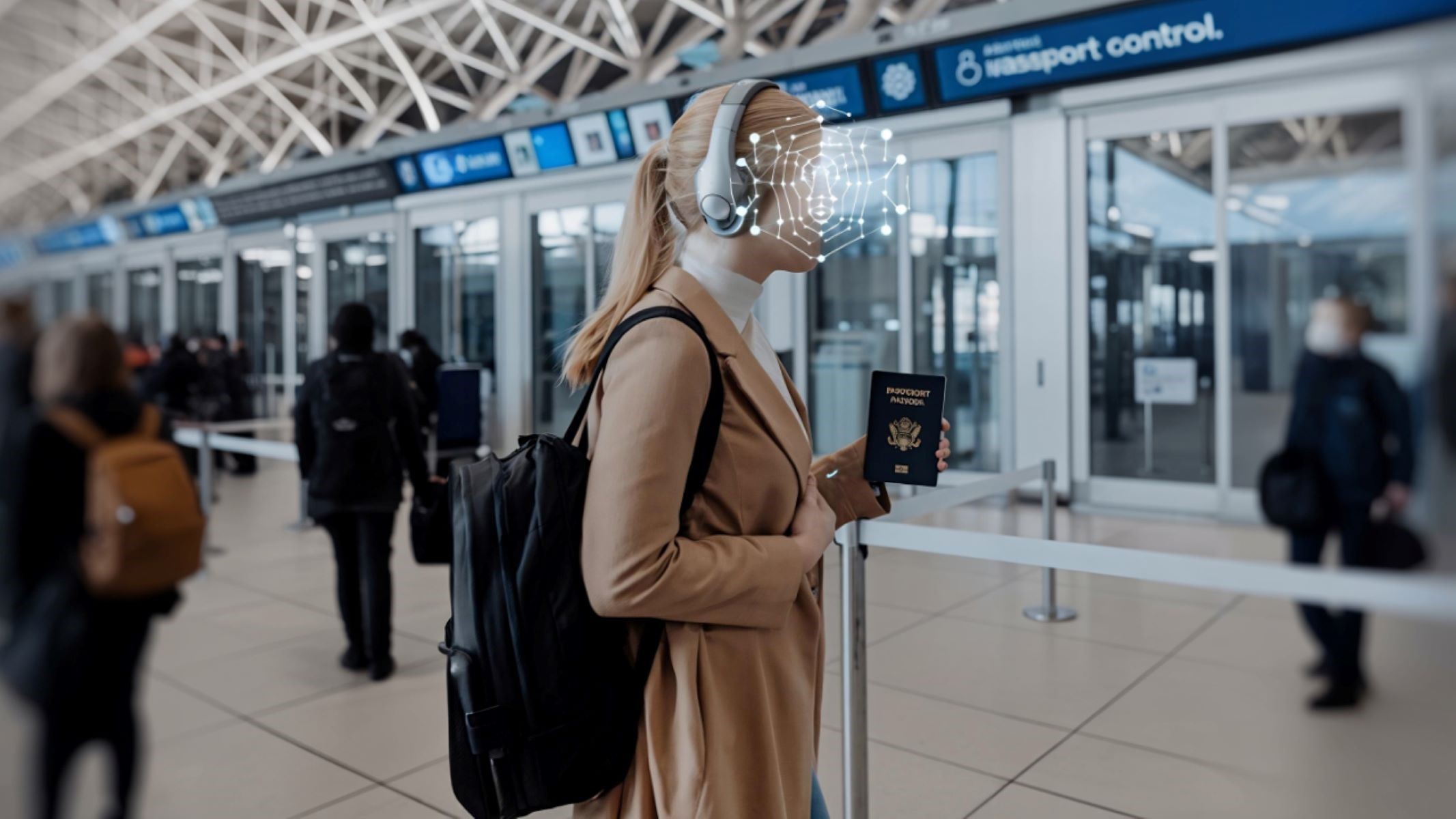
If you’ve ever applied for a passport, visa, or any official ID, you might have come across the term biometric photo. But what exactly does that mean? Is it just a fancy way of saying “passport photo,” or is there more to it? Let’s dive into the world of biometric photos, uncover why they matter, and see how they play a critical role in modern travel.
What Is a Biometric Photo?
A biometric photo is not your average snapshot or selfie—it’s a meticulously crafted image taken under strict technical requirements to serve a very specific purpose: identity verification through biometric systems. Unlike traditional photos that aim to capture moments, moods, or personality, a biometric photo focuses on clarity, uniformity, and measurability. Governments, airports, and other institutions rely on such photos to create a digital representation of your face that machines can analyze with high accuracy.
The importance of this kind of photo lies in how it captures the unique geometric structure of your face. It includes measurable features like the distance between the eyes, the position of the nose, the shape of the mouth, and the outline of your chin and jaw. These attributes are digitally analyzed to create what’s known as a biometric template—a sort of “faceprint” that is as individual as a fingerprint. This template is then stored in a secure database or within the chip of a biometric passport or ID card.
What makes biometric photos distinct is their uniformity across all users. Everyone must follow the same guidelines: neutral facial expressions, straight-ahead gaze, specific lighting conditions, and plain backgrounds. These requirements are not arbitrary—they ensure that the software scanning the photos does not get confused by shadows, smiles, accessories, or tilts of the head. In this way, the biometric image remains consistent and easy to process, regardless of who is using it or where it’s being checked.
In today’s world, biometric photos are a fundamental part of international travel, digital identity systems, and even airport automation. Whether you’re applying for a passport, visa, or e-gate access at a busy terminal, your biometric photo is often the first and most important element in verifying that you are who you say you are. It’s no exaggeration to say that this single image now acts as a digital key to your identity across borders.
The Science Behind Biometric Photos
| Requirement | Purpose | Effect on Accuracy | If Not Met | Why It Matters |
| Clear and unobstructed face | Ensures all facial features are visible | High – allows full mapping of face geometry | Facial data might be incomplete or blocked | The system can’t detect eyes, nose, or mouth clearly |
| Even, shadow-free lighting | Prevents distortion in image analysis | High – consistent lighting improves detail | Shadows can obscure facial markers | Facial recognition software needs clear contrasts |
| Plain background | Keeps focus on the subject’s face | Medium – reduces noise in detection | Busy backgrounds confuse software | A simple background helps isolate facial data |
| Correct photo size & head position | Ensures alignment with software grid | Very high – matches facial features precisely | Head may be cut off or not centered | Positioning helps standardize data across photos |
| Neutral expression | Maintains consistent facial structure | High – avoids shifting facial markers | Smiling or frowning changes key measurements | Software depends on fixed facial geometry |
How Does a Biometric Photo Differ From a Regular Photo?
Let’s face it—those fun selfies from your last beach vacation or the stylish profile pic you use on social media wouldn’t stand a chance in the world of official documentation. Biometric photos aren’t taken for aesthetic value or to capture your best angle. Instead, they follow a very strict set of rules because their purpose is entirely different. While regular photos are all about creativity, memory-making, and self-expression, biometric photos are all about consistency, accuracy, and technical compliance.
- A regular photo is taken for casual, personal, or artistic purposes. You can smile, strike a pose, wear what you like, and pick any background that fits your mood. In contrast, a biometric photo is used strictly for official identification purposes—like passports, visas, or national ID cards. It must follow international standards set by authorities like the ICAO (International Civil Aviation Organization).
- Lighting in a regular photo can be anything from dramatic to natural to dimly lit. Shadows and highlights are often used for artistic effect. But in biometric photos, the lighting must be even and shadow-free. The goal is to eliminate any lighting inconsistencies that could distort facial features and affect facial recognition accuracy.
- The background in a regular photo can include anything from colorful scenery to textured walls or complex visual elements. A biometric photo, on the other hand, must have a plain, uniform background—typically white or light grey. This makes it easier for facial recognition systems to isolate your face without interference from background distractions.
- Facial expressions in a regular photo can vary widely. You might smile, pout, laugh, or even look away from the camera. However, in a biometric photo, only one expression is acceptable: neutral. That means no smiling, no raised eyebrows, no frowning—just a straight face with your mouth closed and your eyes open, looking directly into the camera. This ensures your facial structure remains consistent for biometric analysis.
- In a casual photo, your head can be tilted, turned slightly, or off-center. But in a biometric photo, the head must be positioned straight and centered within the frame. Any deviation from this can result in an unusable image, as it affects how the software aligns and measures key facial points.
- Accessories like sunglasses, hats, scarves, or headphones are perfectly fine in a personal photo. In fact, they might even enhance your style. But for biometric photos, these are strictly forbidden unless worn for religious or medical reasons. Nothing should obscure your face—especially the eyes, eyebrows, nose, or jawline.
- When it comes to size and dimensions, regular photos are flexible. You can crop or frame them however you like. Biometric photos, however, must adhere to a standardized format. Your face should occupy a specific percentage of the image (usually 70–80% of the height), and the photo itself must match defined dimensions—such as 35mm x 45mm or 51mm x 51mm—depending on the country or document type.
Why Are Biometric Photos Important for Travel?
In today’s world of heightened global security and digital identity systems, biometric photos have become an essential component of modern travel. They’re not just another bureaucratic requirement; they are central to how countries manage identity verification, protect their borders, and ensure smooth passenger movement across international checkpoints. Unlike traditional photos, biometric images are designed to be read by machines, enabling real-time facial recognition that adds a powerful layer of security to global travel infrastructure.
One of the most critical roles biometric photos play is in enhancing border security. As millions of travelers pass through international airports daily, authorities need fast, reliable tools to confirm identities and detect potential threats. Biometric systems scan a traveler’s face and compare it to the digital image stored in their passport chip or immigration database. If the facial features align, the traveler is cleared quickly. If not, the system flags the individual for further inspection. This process helps prevent impersonation, catch fraudulent documents, and reduce human error during identity checks.
Another significant benefit is the drastic reduction in processing time at immigration checkpoints. Biometric photos enable the use of automated e-gates and self-service kiosks, which can verify your identity in a matter of seconds without needing manual intervention. This speeds up passenger flow, minimizes bottlenecks, and improves the overall travel experience. In an age where airports are becoming increasingly congested, every second saved during processing matters—for both travelers and border officials.
Furthermore, biometric photos support international compliance and fraud prevention efforts. Global travel organizations like the International Civil Aviation Organization (ICAO) mandate that identity documents include biometric data to meet global standards. This harmonization ensures that passports and visas are universally recognizable and secure. Since biometric photos are linked to measurable facial data, it becomes exponentially more difficult for someone to forge documents or assume another person’s identity. They not only streamline legitimate travel but also form a critical defense against identity theft and international crime.
What Makes a Biometric Photo Valid?
| Requirement | Purpose | Impact on Accuracy | If Not Followed | Reason It Matters |
| Neutral facial expression | To preserve natural facial geometry | High | May distort facial structure | Ensures consistency in face data for recognition software |
| Direct gaze, head centered | To align facial features with biometric templates | Very High | System may fail to detect correct eye positions | Software relies on symmetry and centered positioning |
| No shadows or reflections | To avoid visual obstructions or lighting artifacts | High | Can hide or alter facial landmarks | Accurate lighting is crucial for feature mapping |
| Plain, light-colored background | To isolate facial features clearly | Medium | Background distractions interfere with detection | Simple background improves contrast and facial visibility |
| No face-covering accessories | To fully expose facial markers | High | Features like eyes or nose may be hidden | Unobstructed view allows full biometric analysis |
| Proper photo size and face coverage | To meet automated system measurement criteria | Very High | May result in incomplete or rejected scans | Standard dimensions ensure compatibility with global systems |
| Recent photo (within 6 months) | To reflect current appearance | Medium | Mismatch with actual appearance | Keeps biometric data up-to-date for effective identification |
Where Do You Need Biometric Photos?
Biometric photos are now a universal requirement across many sectors, especially in travel, legal identification, and immigration. Whether you’re flying internationally, applying for a visa, or renewing an official ID, there’s a good chance you’ll need a photo that meets biometric standards. These photos are used to verify your identity with high accuracy through automated systems, and they’ve become a core part of digital documentation in both governmental and private sectors. Here’s a detailed breakdown of where biometric photos are commonly required:
- Passports: Virtually all modern passports are biometric-enabled and require a biometric photo that follows strict international standards. These photos are stored digitally within the passport chip and are used for facial recognition at borders.
- Visa Applications: Most countries require biometric photos as part of their visa application process. These photos are used to verify your identity during entry and can also be linked to biometric fingerprints in certain visa systems.
- National Identity Cards: Several countries have introduced biometric national IDs that store facial images and other biometric data such as fingerprints. These IDs are used for voting, accessing government services, and verifying identity in public and private systems.
- Driver’s Licenses: In many regions, driver’s licenses are being upgraded to include biometric features. A biometric photo ensures that only the rightful license holder can use the document, enhancing security against fraud.
- Residence Permits: For foreign nationals living abroad, residence permits typically require biometric photos for authentication and to prevent identity misuse.
- Work Permits and Employment Documents: Some countries require biometric photos when applying for a work visa or permit. Employers may also use biometric IDs for secure access and identity checks.
- Student IDs for International Programs: Universities that admit international students often require biometric photos for student cards, campus access, and even for use with border control when traveling under a student visa.
- Refugee or Asylum Applications: Individuals seeking asylum or refugee status are often photographed under biometric standards to help maintain accurate records and prevent fraudulent claims.
- Government Service Portals: Some online platforms for tax filing, social security, or healthcare access require identity verification through biometric images linked to national databases.
- e-Passport and Smart Travel Cards: Many airports now issue smart travel cards or e-gates linked to biometric systems, requiring compliant photos for pre-clearance and faster immigration processing.
- Airport Frequent Traveler Programs: Trusted traveler programs such as TSA PreCheck (USA), Global Entry, or Registered Traveller (UK) use biometric photos for secure, expedited travel.
- Security Clearances and Background Checks: When applying for a government job, military position, or high-security occupation, biometric photos may be used in combination with background screening.
- Banking and Financial Services: Some financial institutions are incorporating biometric ID systems, especially in digital onboarding, requiring compliant photos for customer identification.